TL;DR
If you have garment images and no studio budget,
AI lookbooks can go straight to short-form video — no shooting required.
What We Tested
We published three YouTube Shorts using only LaonGEN-generated lookbook images as source material.
No camera, no model booking, no studio.
The only variable across the three videos was the content format.
Fixed conditions:
| Condition | Value |
|---|---|
| Tool | LaonGEN |
| Shoot days | 0 |
| Prompt complexity | Minimal |
| Image source | Garment photos → AI lookbook |
| Distribution | YouTube Shorts |
Variable: Content format
Variants: Cycling fitting / Product-to-model / Style-swap meme
Results
Variant 1: Cycling Fitting
Title: “The clothes I’ve never worn look the best on me”
The hook: a Velocio jersey ($199) and Assos bib shorts ($230) ordered from overseas — the items hadn’t arrived yet.
LaonGEN generated the fitting first.
The video shows the AI result with the simple caption that the real product is still in transit.
- The “before the package arrives” angle made the scenario feel personal and relatable.
- Cycling apparel with technical details (bib straps,
chamois seam) rendered clearly on the AI model. - Length: ~15 seconds. No voiceover, no text other than the title card.
Variant 2: Product-to-Model
Title: “POV: You upload product photos and the AI model just wears them”
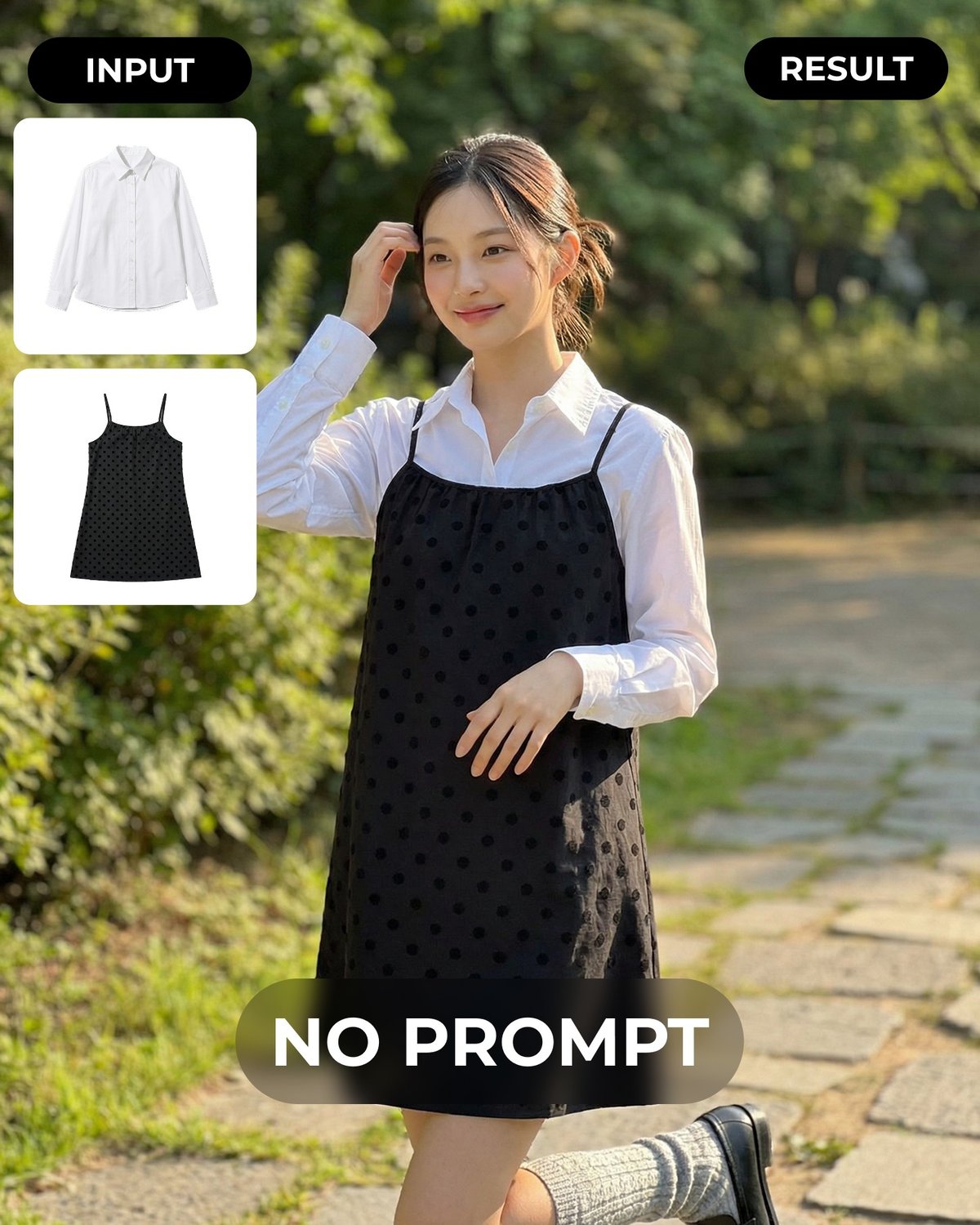
Five flat-lay product images in, one AI model lookbook out.
This format was made with Kling AI integration alongside LaonGEN.
The video is a straight before/after: product shots on the left,
model images on the right.
- The seller perspective (“I didn’t shoot anything”) was the main draw.
- Five input images produced a clean, multi-angle lookbook sequence.
- Length: ~10 seconds. No narration — the image transition does the work.
Variant 3: Style-Swap Meme
Title: “He won’t do the dishes. I’ve decided.”
A Dsquared2 hoodie swapped into a maid outfit using LaonGEN’s style transfer.
The setup uses the “my boyfriend’s clothes → AI makeover” couple meme format.
The payoff is the style swap reveal.
- Meme framing (couple context + absurd resolution) extended watch time past the swap reveal.
- The hoodie’s oversized silhouette translated well into the transformed style.
- Length: ~22 seconds.
The longest of the three — the narrative arc needs the extra time.
When to Choose What
The three formats serve different goals.
Choosing by intent is more useful than choosing by aesthetics.
- For pre-launch or pre-arrival product → use the cycling fitting format.
The “I haven’t worn it yet” angle is a natural short-form hook and works for any direct-import item. - For seller accounts or brand channels → use the product-to-model format.
It shows the workflow directly and speaks to other operators who want to know how the images were made. - For lifestyle or couple-focused content → use the style-swap meme format.
It needs a clear narrative setup (the conflict) and a visual payoff (the swap).
Without both, it reads flat. - If your audience is general consumers → the meme format travels furthest.
It does not require the viewer to know what AI lookbooks are. - If your audience is fashion brand operators → the product-to-model format is more relevant.
They recognize the workflow problem immediately.
Credit Value
Each of these three Shorts came from a single generation session.
The cycling fitting used one model, one garment.
The product-to-model used five product images and produced multiple angles.
The style-swap used one garment and one style reference.
Generating more format variants from the same garment (fitting → style swap → before/after) keeps your cost-per-video low.
If a format does not land, you have not spent extra on the other two —
they come from the same generation run.
The practical test: try a lookbook with a garment you already have — you get 100 free credits on sign-up.
If the model result is usable,
you know what the video source material will look like.
Try It Free
Sign up for 100 free credits. Before committing to a format, generate one lookbook and check:
- Does the garment read clearly on the AI model — silhouette, detail, and color?
- Does the result fit the format you have in mind (fitting, before/after, or style swap)?
- Is the image quality consistent enough to use as a Short’s main visual?
If all three are yes, the format is ready to build around.